
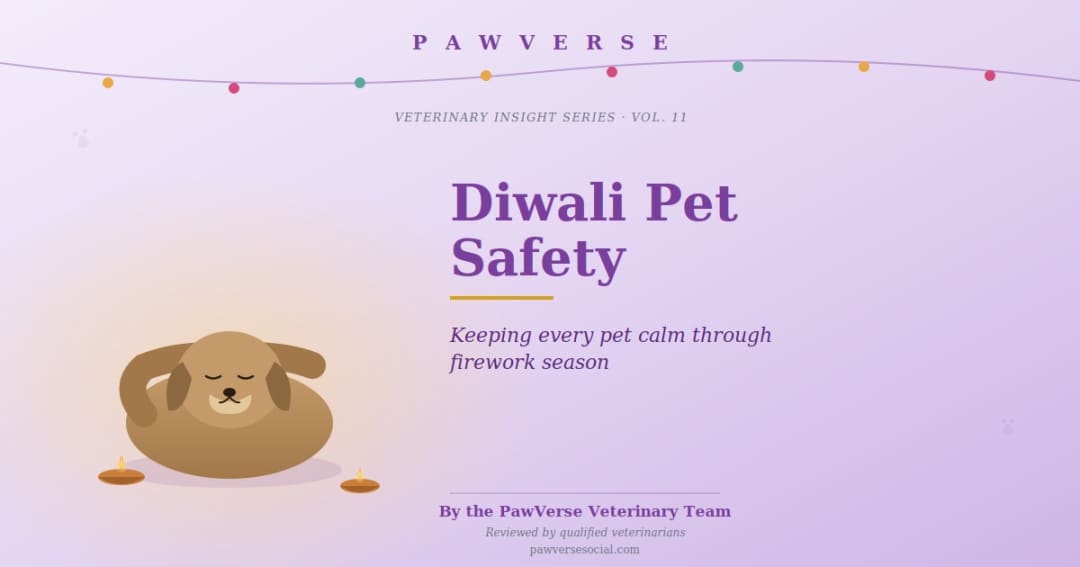
Diwali is the most beautiful festival of the year for us. For our pets, it is often the most terrifying.
Every year, in the days around Diwali, vets across India brace for the same surge: dogs that have bolted in panic and gone missing, pets injured trying to escape the noise, animals brought in shaking and unresponsive, and the heartbreaking cases of pets that ran into traffic to get away from the sound. The fireworks we find festive are, to an animal, an inexplicable assault — sudden, deafening explosions with no warning and no end in sight.
Here is what most people do not realise. A dog hears roughly four times better than we do. A cat hears even better than a dog. What sounds loud to us is physically painful to them. Add the flashing lights, the smell of smoke and gunpowder, and the change in the household routine, and you have a recipe for genuine, severe distress in almost every companion animal.
The good news is that with preparation, you can carry your pets through this season safely and far more calmly. This guide covers exactly how — for dogs and cats first, who are most affected, then birds, rabbits, and the other animals who suffer in silence.
Read this well before the festival, not on the night itself. The most important steps need a few weeks of lead time.
Why fireworks affect pets so deeply
It helps to understand what your pet is actually experiencing, because it is not stubbornness or drama. It is real fear, rooted in biology.
Their hearing is far more sensitive than ours, so the volume is genuinely painful. They cannot understand the cause, so unlike us, they have no way to reassure themselves that the bangs are harmless and will pass. The unpredictability is its own torture — an animal never knows when the next explosion will come. And their fight-or-flight instinct, triggered by perceived danger, floods their body with stress hormones and overwhelms them with the urge to flee.
This is why a normally calm, well-behaved dog may claw through a door, leap from a balcony, or run for kilometres on Diwali night. They are not misbehaving. They are in a state of primal terror.
Preparing in the weeks before
The single biggest mistake pet parents make is leaving everything to the night itself. The most effective steps need preparation. Start two to three weeks ahead if you can.
Update the ID and microchip details. Diwali is the most common time of year for pets to go missing. Make sure your dog or cat is wearing a collar with a current phone number, and if they are microchipped, confirm the registered contact details are up to date. This single step reunites countless lost pets with their families.
Build a safe room. Identify the quietest, most interior room in your home — one with the fewest windows and the least exposure to outside noise. In the weeks before, start making it a positive space with your pet's bed, toys, and treats, so by Diwali it already feels like a refuge rather than a strange confinement.
Talk to your vet early. If your pet has severe firework anxiety, this is the conversation to have now, not on the night. For some animals, vets can prescribe anti-anxiety medication or recommend calming aids. These often work best started before the festival, and your vet may want to try a test dose in advance.
Consider desensitisation. For pets with a known fear, gently playing firework sounds at very low volume over the preceding weeks, paired with treats and calm, can slowly reduce the terror response. This takes time and patience, which is exactly why it cannot be left to the last day.
Stock up on distractions. New long-lasting chews, puzzle feeders, and favourite treats, ready for the loud nights.
On the nights themselves — dogs and cats
When the fireworks begin, your calm presence and preparation matter more than anything.
Bring them indoors well before dark. Never let a dog or cat outside during peak firework hours. Walk dogs early, in daylight, before the noise starts. Keep cats in for the whole festival period.
Close everything. Shut all windows, doors, and curtains. This muffles the sound and blocks the flashes of light. It also prevents a panicked escape.
Create a wall of familiar sound. Play music, the television, or white noise at a normal volume to soften the bangs. There are calming playlists made specifically for anxious dogs, and they genuinely help.
Let them hide, and never punish fear. If your pet wants to squeeze under the bed or into a cupboard, let them — hiding is how they self-soothe. Do not drag them out, and never scold them for whining, pacing, or trembling. Fear is not something an animal can be disciplined out of, and punishment makes it far worse.
Stay calm and present, but do not over-fuss. Your pet reads your energy. Be a steady, reassuring presence. You can comfort them — the old advice that comforting "rewards" fear is a myth — but do it calmly. Frantic reassurance tells them there really is something to panic about.
Use calming aids if you have them. Anxiety wraps and snug-fitting vests apply gentle pressure that soothes some dogs. Pheromone diffusers for dogs and cats can take the edge off. If your vet has prescribed medication, give it as directed, ideally before the fear escalates.
Watch for genuine distress. Mild anxiety is expected. But if your pet is in extreme panic — relentless, inconsolable, hurting themselves trying to escape — that is a reason to call your vet, even at night.
The pets everyone forgets at Diwali
Dogs and cats get the attention, but the festival is just as hard, and sometimes harder, on smaller and outdoor animals.
Birds. Pet birds are acutely sensitive to both noise and the air pollution that firecrackers produce. The smoke and particulate matter can cause real respiratory harm to a bird's delicate system. Move cages to the most interior, well-ventilated room, away from windows. Cover the cage partially to reduce visual stress while keeping airflow. Keep them well away from any smoke drifting in from outside.
Rabbits, guinea pigs, and other small mammals. These are prey animals, hardwired to panic at sudden noise, and severe fright can genuinely send them into shock. Move their enclosures to the quietest interior room, provide extra hiding spots and bedding to burrow into, and keep them with their bonded companion if they have one. Check on them calmly and often.
Fish. Even aquariums are affected — vibrations and sudden tank-side lights can stress fish. Keep the room calm, avoid switching the tank light on and off, and do not tap the glass.
Community and street animals. If you care for strays in your area, Diwali is brutal for them too. Leaving a quiet, sheltered corner accessible, and gently discouraging firecrackers near where animals shelter, can spare them real suffering. Many of them have nowhere to hide.
After the festival
The danger does not end when Diwali night does.
Walk dogs carefully for the next few days. Streets are littered with firecracker debris, unexploded crackers, sharp fragments, and chemical residue, all of which are hazardous to curious noses and paws. Keep dogs leashed and watch where they sniff.
Watch for delayed stress signs. Some pets stay jumpy, off their food, or withdrawn for a day or two afterward. This usually settles. If it does not, or if your pet seems genuinely unwell, see a vet.
Check for injuries. A pet that was in a state of panic may have hurt itself without your noticing. Give them a calm once-over for any cuts, sore paws, or tender spots.
If your pet ingested any firecracker residue, or you notice vomiting, drooling, breathing difficulty, or unsteadiness, treat it as urgent. Our pet emergency guide covers the warning signs that mean you should get to a vet immediately.
A note on the bigger picture
We will say this gently, because it matters. The kindest gift you can give the animals in your neighbourhood — your own and the strays who have no safe room to retreat to — is to celebrate with fewer fireworks, or with the quieter, low-noise alternatives now widely available.
A Diwali of lights, sweets, family, and diyas loses nothing of its beauty. But for the dogs trembling under beds across the country, for the birds choking on smoke, and for the street animals with nowhere to run, a quieter celebration is a genuine act of compassion. More and more Indian families are choosing this each year, and the animals are the better for it.
A final word
Diwali should be a season of warmth and togetherness, and with a little planning, it can be exactly that for every member of your family — including the four-legged, feathered, and finned ones.
Prepare the safe room. Update the ID tag. Talk to your vet early if your pet struggles. Close the windows, soften the sound, and be a calm presence. Let them hide, never punish their fear, and stay with them through the worst of it.
Do these things, and you will get your pet through the festival not just safely, but feeling that even on the most frightening night of the year, their person was right there beside them. That is what they need most.
From all of us at PawVerse, we wish you and your whole family — every species included — a happy, safe, and peaceful Diwali. If you want to swap tips with other Indian pet parents on getting through firework season, that is exactly the kind of thing our community is here for.
A note on this article: This guide is general information for Indian pet parents and is not a substitute for personalised advice from a qualified veterinarian. If your pet has severe anxiety, speak to a vet well before the festival about medication or calming options, and contact a vet immediately in any emergency.